4 Best D Ring Shackle Receivers for Off-Road Recovery (2026)
Compare 4 d ring shackle receiver options for off-road recovery by break strength, pin size and fit. See which hitch D-ring suits your truck or Jeep.
 By Graham Fisher
Updated November 8, 2026
 By Graham Fisher
Updated November 2026
A d ring shackle receiver is a hitch-mounted recovery point: a receiver tube that slides into your vehicle’s 2-inch or 1-1/4-inch hitch opening, with a D-ring shackle attached so you can connect a recovery strap, kinetic rope or winch line. For off-road owners who already carry a hitch, it is one of the most convenient recovery upgrades available. The selection criteria used here are published break strength and working load limit, receiver size compatibility, pin and D-ring dimensions, corrosion resistance of the finish, and the patterns owners tend to describe in feedback about fit and durability.
Our top picks at a glance
- 1TOP CHOICEBest overallAUTOBOTS Tow Hitch Receiver 2" Shackle Hitch Receiver RedView on Amazon
- 2
 Best for heavy-duty steel buildsKrytonel Shackle Hitch Receiver 2" Recovery Hitch with D Ring, RedView on Amazon
- 3
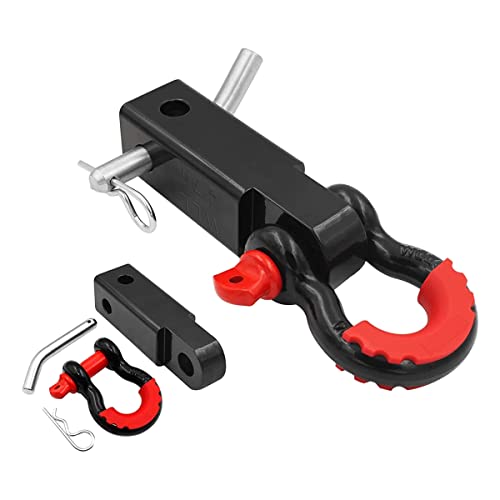 Best for rust-resistant useShackle Hitch Receiver, 2 inch 42000 Lbs Maximum Break Strength, Solid with 3/4'' D RingView on Amazon
- 4
 Best for 1-1/4 inch receiversTusk 1-1/4 Inch Hitch Receiver with 1/2 Inch Recovery ShackleView on Amazon
Our Top Picks
Quick Comparison
| Product | Best for | Key feature |
|---|---|---|
| AUTOBOTS Tow Hitch Receiver 2″ Shackle Hitch Receiver Red | Most 2-inch hitch trucks and SUVs | 45,000 lb break strength with 5/8″ pin and 3/4″ D-ring |
| Tusk 1-1/4 Inch Hitch Receiver with 1/2 Inch Recovery Shackle | Smaller 1-1/4 inch receivers | Compact tow point with 1/2″ shackle |
| Shackle Hitch Receiver, 2 inch 42000 Lbs Maximum Break Strength | Owners prioritizing corrosion resistance | Solid construction with 3/4″ D-ring, rust-resistant finish |
| Krytonel Shackle Hitch Receiver 2″ Recovery Hitch with D Ring | Heavier recovery loads on 2-inch hitches | 11,000 lb WLL with 3/4″ D-ring and 5/8″ hitch pin |
AUTOBOTS Tow Hitch Receiver 2″ Shackle Hitch Receiver Red
AUTOBOTS Tow Hitch Receiver 2" Shackle Hitch Receiver Red | 45,000 Lbs Break Strength, with 5/8" Pin, 3/4 D Ring Shackle, Towing Accessories for Truck Jeep Trailer Recovery Off-Road
Best for: Most 2-inch hitch trucks and SUVs that need a straightforward recovery point.
This is a 2-inch shank receiver aimed at owners who want one hitch-mounted recovery point for general trail use, with the D-ring and pin sized for common recovery strap connections.
Key specs
- 2-inch receiver shank
- 45,000 lb break strength (as stated in the listing)
- 5/8-inch hitch pin
- 3/4-inch D-ring shackle
Pros
- Fits the most common hitch size on trucks and SUVs
- Pin and D-ring sizing matches standard recovery straps
- Bright red finish makes it easy to spot in the mud
Cons
- Rated capacity should be verified against your strap and shackle system
- Only useful on vehicles with a rear hitch
Bottom line: A sound default choice for owners with a 2-inch hitch who want a clearly sized, straightforward recovery point.
View on AmazonKrytonel Shackle Hitch Receiver 2″ Recovery Hitch with D Ring, Red
Krytonel Shackle Hitch Receiver 2 ", Recovery Hitch with D Ring, Red | 45,000 lbs Break Strength, 11,000 lbs WLL, 3/4" D Ring Shackle and 5/8" Black Hitch Pin for Off-Road Vehicle Recovery
Best for: Heavier recovery loads on 2-inch hitches, with a published working load limit.
Owners who run larger vehicles or expect to pull stuck rigs out of deep ruts often look for a published working load limit alongside break strength, and this listing states both.
Key specs
- 2-inch receiver shank
- 45,000 lb break strength and 11,000 lb WLL (as stated in the listing)
- 3/4-inch D-ring shackle
- 5/8-inch black hitch pin
Pros
- States a working load limit, not just break strength
- Pin and D-ring dimensions suit common recovery setups
- Good fit for heavier vehicles on 2-inch hitches
Cons
- Only fits 2-inch receivers
- Black finish shows less contrast against dark terrain
Bottom line: Suited to owners who want to see a working load limit on paper and run a heavier truck or SUV on a 2-inch hitch.
View on AmazonShackle Hitch Receiver, 2 inch 42000 Lbs Maximum Break Strength, Solid with 3/4” D Ring
Shackle Hitch Receiver, 2 inch 42000 Lbs Maximum Break Strength, Solid with 3/4'' D Ring, Heavy Duty Towing Hitch Receivers, Never Rust, Best Towing Accessories for Vehicle Recovery Off-Road
Best for: Owners who prioritize corrosion resistance for vehicles that see salt, mud and water crossings.
Listings for this style emphasize a solid build and a rust-resistant finish, which matters for a part that stays on the hitch year-round and gets soaked in mud.
Key specs
- 2-inch receiver shank
- 42,000 lb maximum break strength (as stated in the listing)
- 3/4-inch D-ring
- Rust-resistant finish (as described in the listing)
Pros
- Corrosion-resistant finish suits wet and salty climates
- Solid construction without welded-up appearance concerns
- 3/4-inch D-ring matches common shackle sizes
Cons
- Stated break strength is lower than some competitors, so confirm it meets your loads
- Finish durability depends on how it is maintained, so inspect it regularly
Bottom line: A good pick for owners in wet or coastal areas who want a rust-resistant receiver on a 2-inch hitch.
View on AmazonTusk 1-1/4 Inch Hitch Receiver with 1/2 Inch Recovery Shackle
Tusk 1-1/4 Inch Hitch Receiver with 1/2 Inch Recovery Shackle Tow Point Attachment
Best for: Vehicles with a 1-1/4 inch hitch receiver, where a standard 2-inch unit will not fit.
Smaller receivers are common on compact trucks, some SUVs and certain crossovers, and this unit is sized for that opening rather than a 2-inch shank.
Key specs
- 1-1/4-inch receiver shank
- 1/2-inch recovery shackle
Pros
- Correct choice when your hitch is 1-1/4 inch
- Compact profile for lighter recovery work
- Simple attachment for tow point use
Cons
- Smaller shackle size limits the strap and rope options you can use
- Not intended for heavier recovery loads, so check rated capacity carefully
Bottom line: The right option for 1-1/4 inch hitch owners who need a recovery point for lighter-duty recovery.
View on AmazonBuying Guide
Receiver size (2-inch vs. 1-1/4-inch)
Measure the opening on your hitch before anything else. Most full-size trucks and SUVs use a 2-inch receiver, while many compact vehicles use 1-1/4-inch. A receiver tube must match the opening exactly, and forcing a mismatched unit is a common mistake that can damage the hitch.
Good picks for this: AUTOBOTS Tow Hitch Receiver 2″ Shackle Hitch Receiver Red, Tusk 1-1/4 Inch Hitch Receiver with 1/2 Inch Recovery Shackle
Break strength and working load limit
Break strength is the load at which the part fails; working load limit (WLL) is the rated load for normal use, typically a fraction of break strength. Recovery loads can spike well above the weight of the vehicle, so compare WLL where it is published and build in margin. Manufacturers specify these numbers under specific test conditions, so treat them as guidance rather than guarantees.
Good picks for this: Krytonel Shackle Hitch Receiver 2″ Recovery Hitch with D Ring, Shackle Hitch Receiver 2 inch 42000 Lbs Solid with 3/4” D Ring
D-ring and shackle size
The D-ring must accept your recovery strap or rope loop and the shackle pin must be compatible with the D-ring opening. Larger D-rings are more forgiving with thick straps. Check the stated D-ring diameter against your recovery gear before buying.
Good picks for this: AUTOBOTS Tow Hitch Receiver 2″ Shackle Hitch Receiver Red, Krytonel Shackle Hitch Receiver 2″ Recovery Hitch with D Ring
Hitch pin diameter and fit
The hitch pin holds the receiver in the hitch. Listings typically specify a 5/8-inch pin, and the pin should be the correct diameter with a secure clip or lock. A loose or undersized pin is a safety concern during recovery.
Good picks for this: AUTOBOTS Tow Hitch Receiver 2″ Shackle Hitch Receiver Red, Krytonel Shackle Hitch Receiver 2″ Recovery Hitch with D Ring
Corrosion resistance and finish
Receivers sit in the weather and in mud, salt and water. Look for a rust-resistant finish or a corrosion-resistant material, and plan to inspect the threads, pin and welds periodically for rust or cracks.
Good picks for this: Shackle Hitch Receiver 2 inch 42000 Lbs Solid with 3/4” D Ring
Use case: light recovery vs. heavy recovery
Match the receiver to the work you expect to do. Light tow-point use for pulling a stuck rig a short distance is different from winching a heavy vehicle out of a ditch. Be honest about your loads and choose a unit with a clear rated capacity.
Good picks for this: Krytonel Shackle Hitch Receiver 2″ Recovery Hitch with D Ring, Tusk 1-1/4 Inch Hitch Receiver with 1/2 Inch Recovery Shackle
Care and inspection
After each trip, check the receiver for bends, cracks, rust and a secure pin. Replace a damaged receiver rather than repairing it. Recovery equipment that has been overloaded or damaged should be retired. For specific load questions, consult a recovery professional or the manufacturer.
Good picks for this: Shackle Hitch Receiver 2 inch 42000 Lbs Solid with 3/4” D Ring, AUTOBOTS Tow Hitch Receiver 2″ Shackle Hitch Receiver Red
FAQ
What is a d ring shackle receiver used for?
It is a recovery point that mounts in your vehicle’s hitch receiver opening. You attach a recovery strap or rope to the D-ring shackle to pull a stuck vehicle, or to attach to another vehicle for towing.
How do I know if I need a 2-inch or 1-1/4-inch receiver?
Measure the opening in your hitch. A 2-inch unit fits 2-inch receivers and a 1-1/4-inch unit fits 1-1/4-inch receivers. The two are not interchangeable.
What does break strength mean?
Break strength is the load at which the component is expected to fail under the manufacturer’s test conditions. It is not a safe working load. Check the working load limit where it is published.
Can I use a d ring shackle receiver for towing?
Some owners use these for tow-point attachment, but rated capacity and intended use vary by product. Confirm the rating and follow your vehicle’s towing guidance, and consult a professional if unsure.
How often should I inspect the receiver?
Inspect before and after each off-road trip and after any heavy recovery. Look for cracks, bends, rust, a loose pin and worn threads.
Does the finish matter?
Yes, especially in wet or salty conditions. A corrosion-resistant finish helps the part last, but you should still inspect it and keep it clean.
Should I replace a receiver after a hard recovery?
If the receiver was loaded near or above its rated capacity, or shows any deformation, replace it. Recovery loads can be unpredictable, so when in doubt, retire the part.
Conclusion
For most 2-inch hitch owners, the AUTOBOTS unit is a solid default with a clearly stated break strength and standard pin and D-ring sizing. If you want a published working load limit for heavier loads, the Krytonel listing is the better fit. Owners in wet or salty climates should consider the rust-resistant option, while 1-1/4 inch hitch owners will need the Tusk unit. Match the receiver size to your hitch, check the rated capacity against your recovery gear, and inspect the part regularly.
Sources
- workplace rigging and load-handling safety principles that apply to shackles and lifting hardware (osha.gov)
- consumer product safety guidance on rated loads and hardware inspection (cpsc.gov)
- engineering standards for shackles and rigging hardware, including rated capacity concepts
Related reading
- 2 Hitch Receiver D Ring Shackle Mount: How to Choose and Install One Safely
- Top 5 Hitch D Ring Shackles for Off-Road Recovery
- Top 4 Hitch Mounted D-Ring Shackle Options for Off-Road Recovery
- Split D Ring Shackle Buyer's Guide: 7 Best Options for Off-Road Recovery (2026)
- Locking D Ring Shackle Compared: 3 Best Picks for Off-Road Recovery (2026)
About Graham Fisher
Graham Fisher is part of our editorial team and reviews and edits our off-road vehicle upgrades guides, checking product details against manufacturer specifications and owner feedback.
About the author
Graham Fisher writes reviews and buying guides for Offroad Lockers.